
Paintings on Paper
Paper is a vulnerable material, and paintings on paper share those vulnerabilities. Whether the medium is watercolor, gouache, tempera, acrylic, or oil paint, paintings on paper are prone to physical damage as well as damage from exposure to excess light, moisture, or heat.
Treatments must be gentle to preserve the integrity of antique materials and media. Surface cleaning can be performed with buffered water or solvent, and is often done on a blotter, capillary mat, or screen over suction.
Because paintings on paper are often glued to a support board, they are also subject to damage from proximity to acidic boards or glues, which cause paint to become brittle and discolored.
In these cases, a backing removal treatment is necessary to separate the painting from its acidic support. In this treatment, small areas of board are humidified and lifted away, and adhesives are softened and cleared from the paper’s backside (verso).
Featured Projects
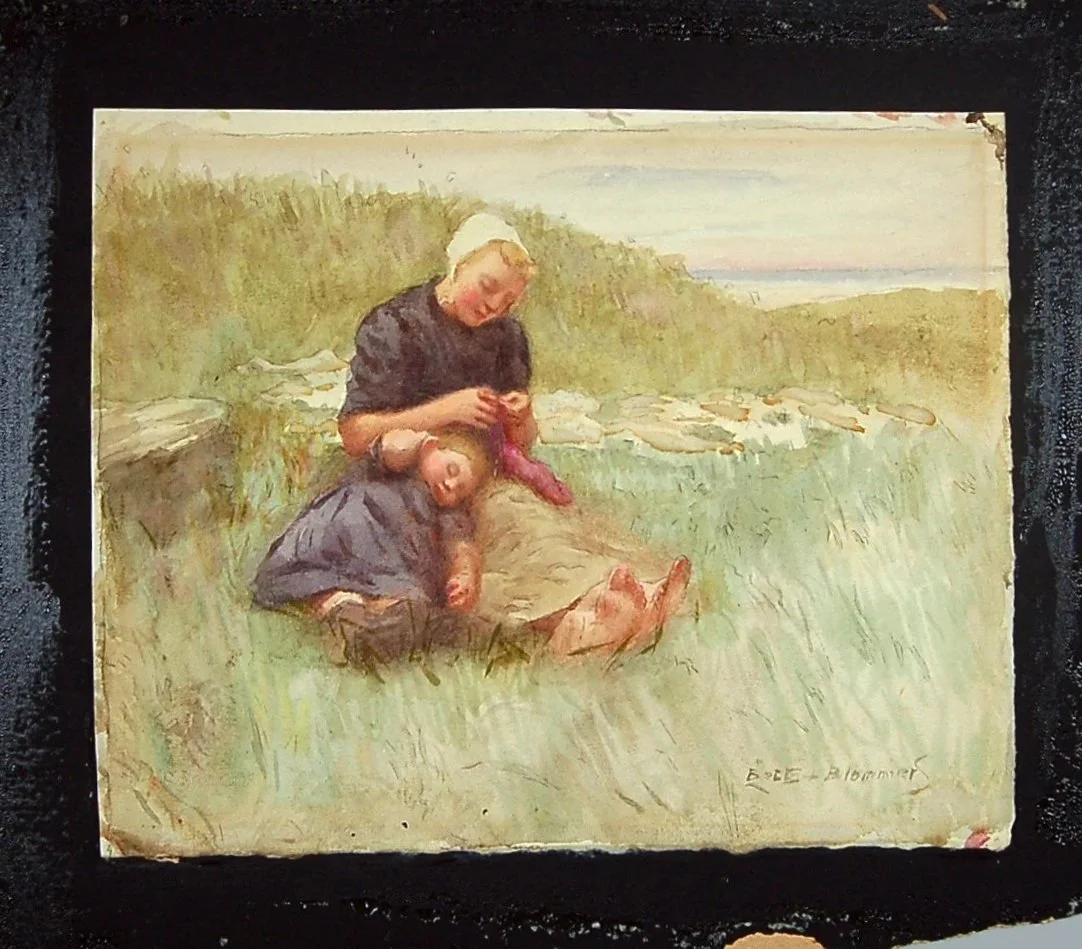
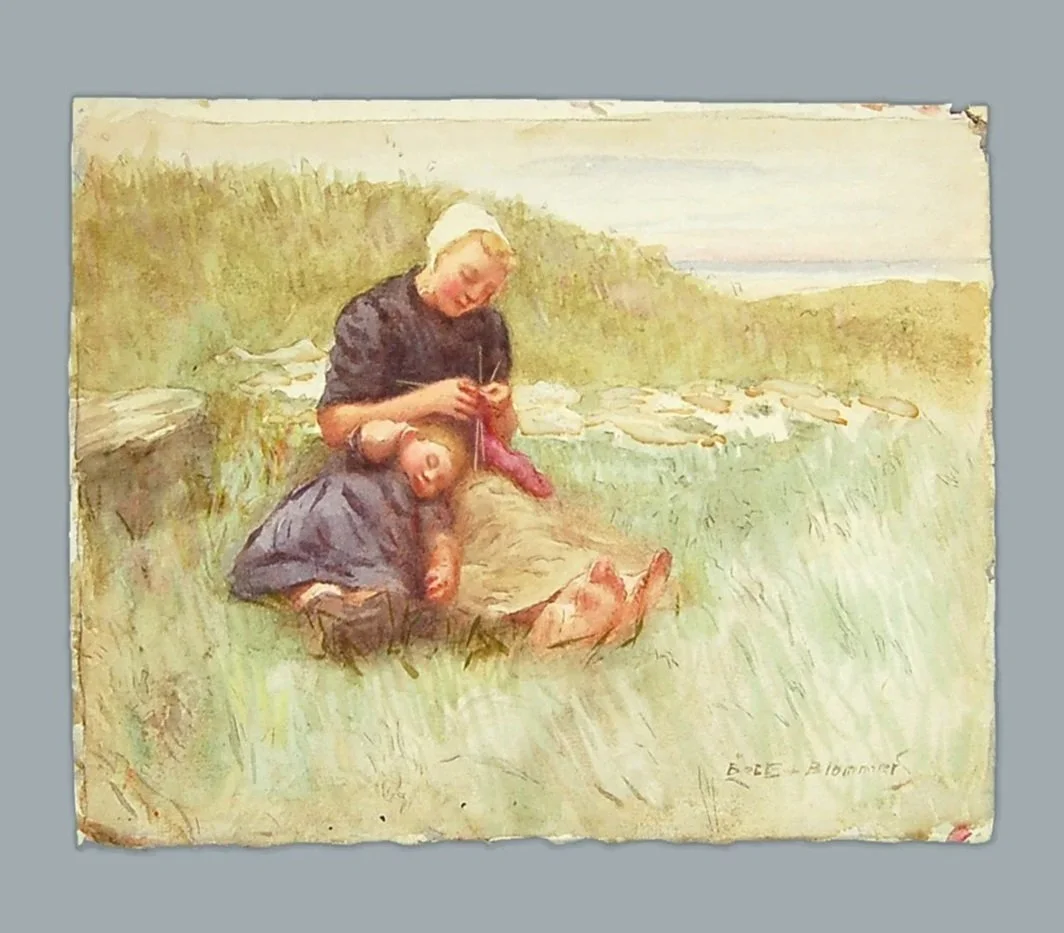
Early 20th century painting by Bloomers.
Condition: the paper had been secured to black cardboard with a thick layer of rabbit skin glue. The board was severely brittle, so that any pressure or handling would make it snap or break along with the painting itself.
Treatment: the board and adhesive were removed from the verso of the painting. The painting was blotter washed to reduce minor staining around the perimeter of the paper. The lead white was also chemically reduced from its black appearance back to its white pigment, revealing the knitting needles in the woman’s hands.
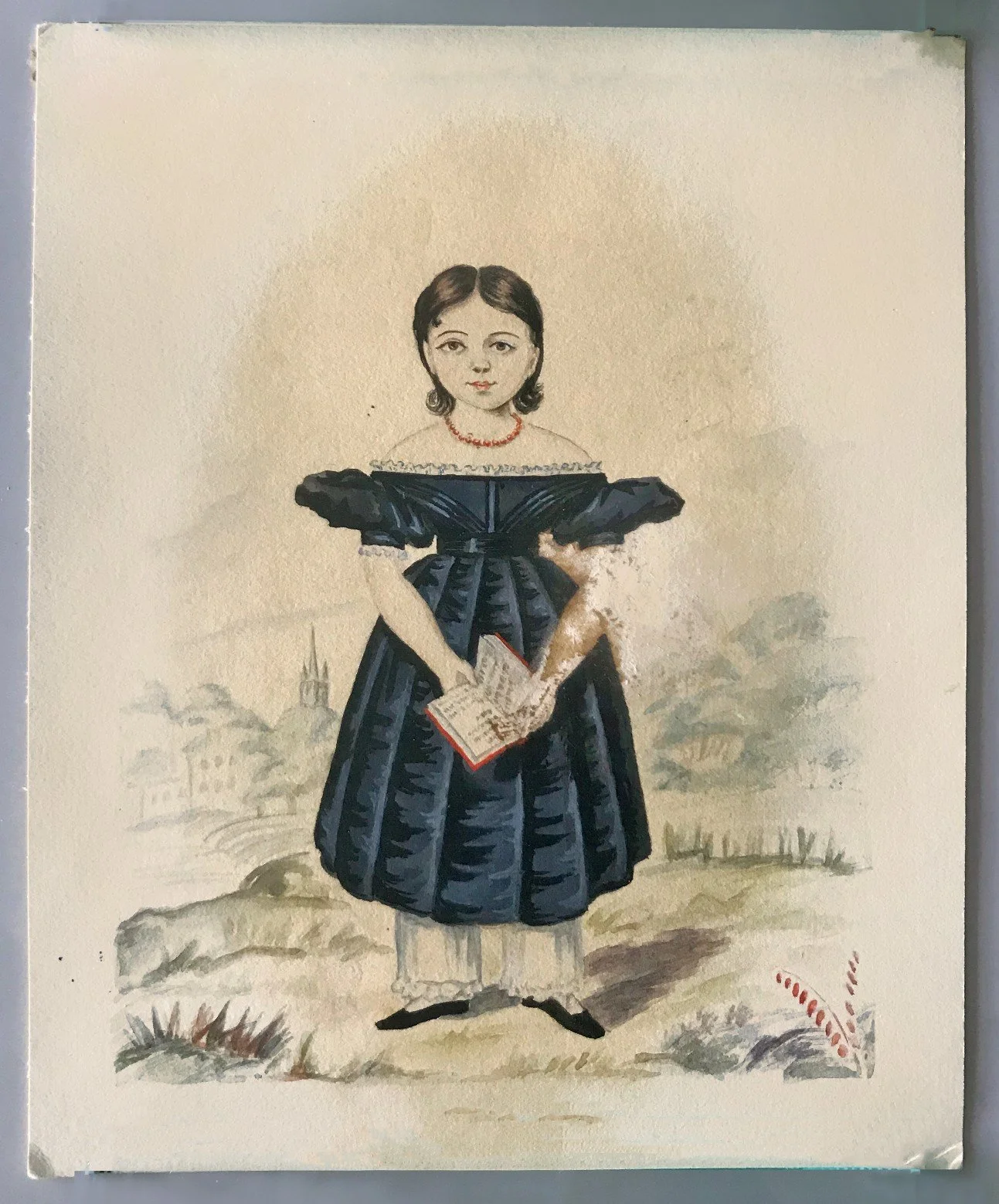
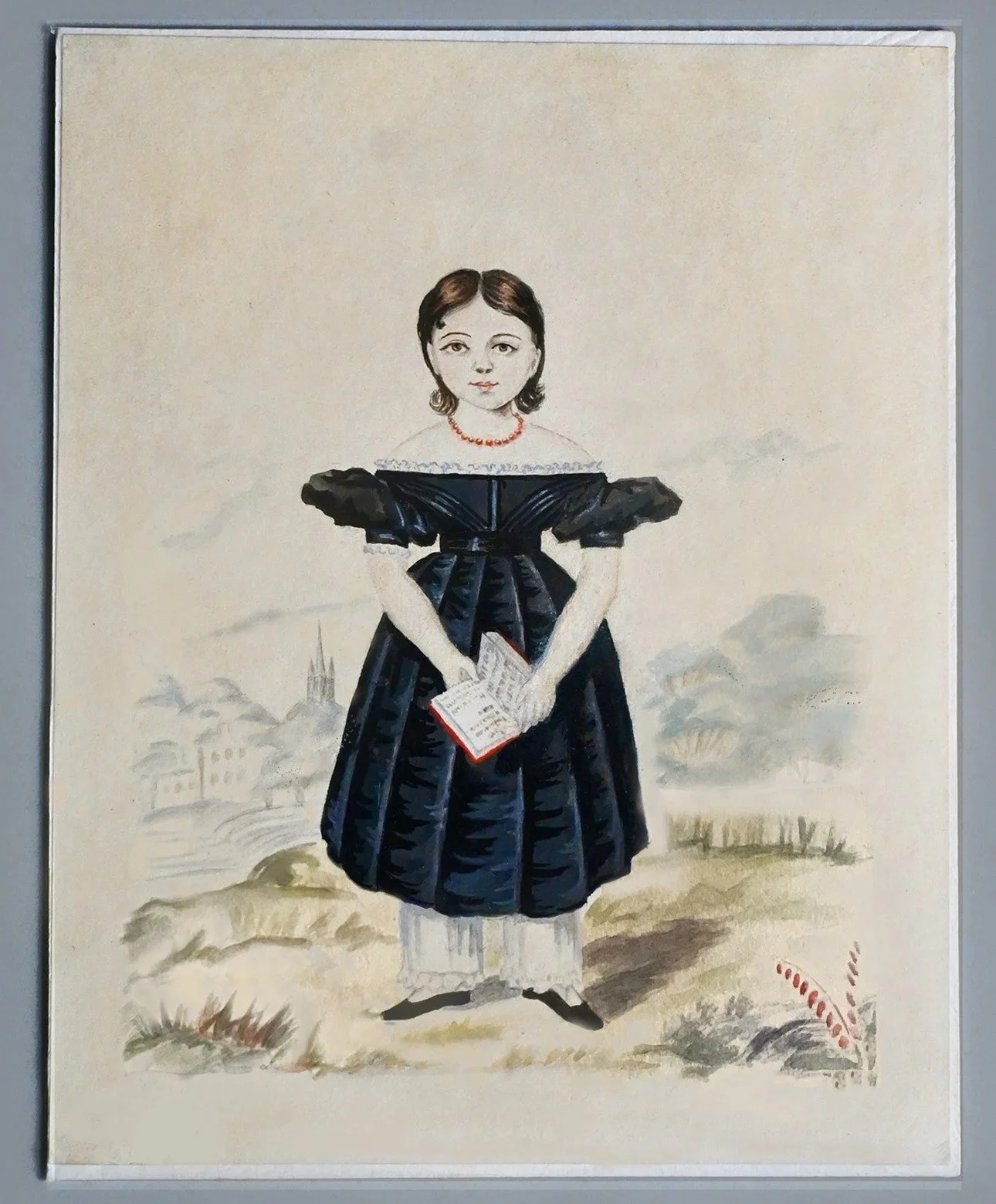
Detailed 19th century watercolor and gouache painting.
Condition: the figure’s arm had been painted over with lead white paint that oxidized and discolored. The painting had also been overmatted with an oval opening, causing dramatic light damage to the paper.
Treatment: the painting was blotter washed to remove discoloration. The lead white was also reduced to reveal the paper and details underneath.
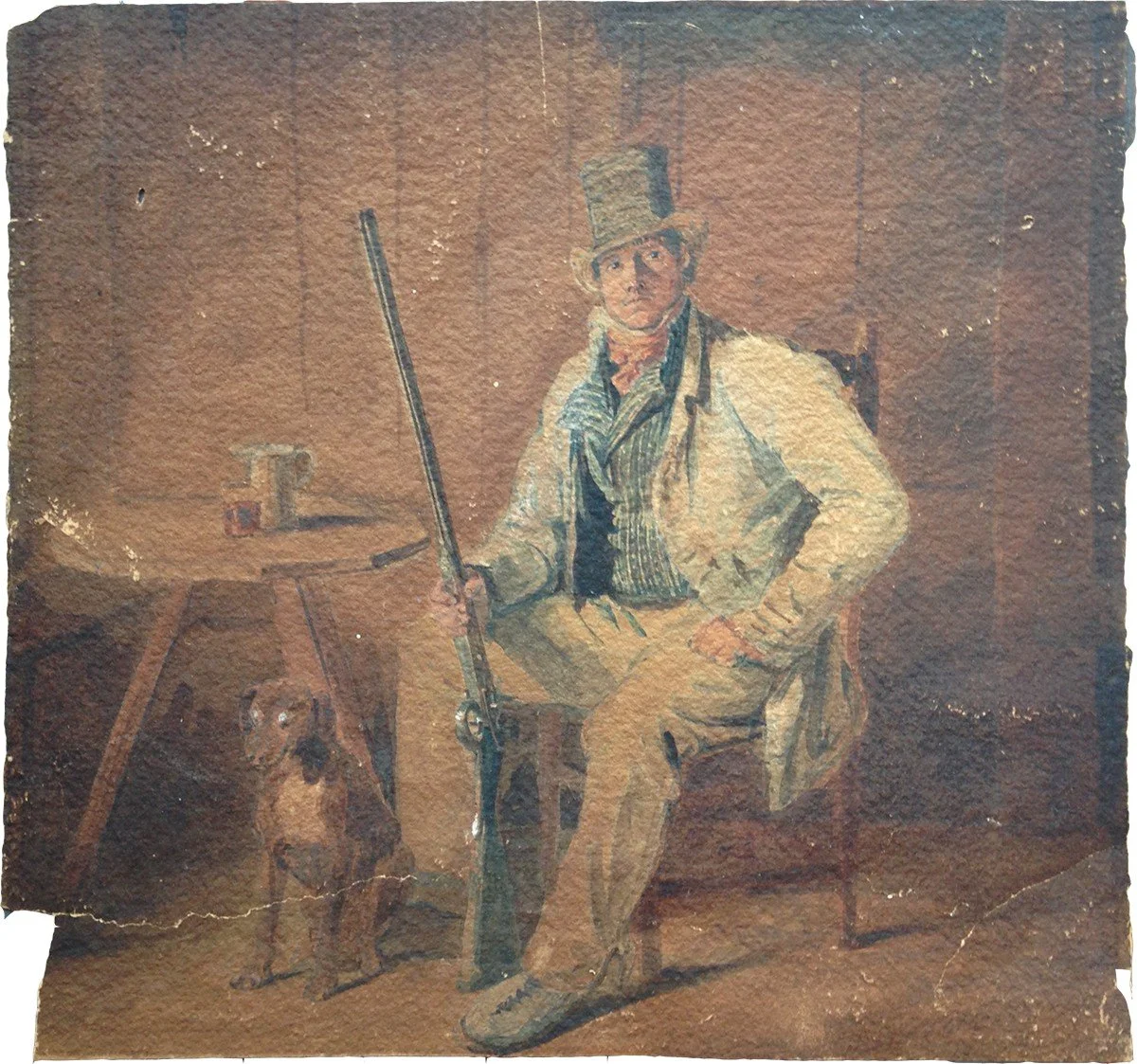
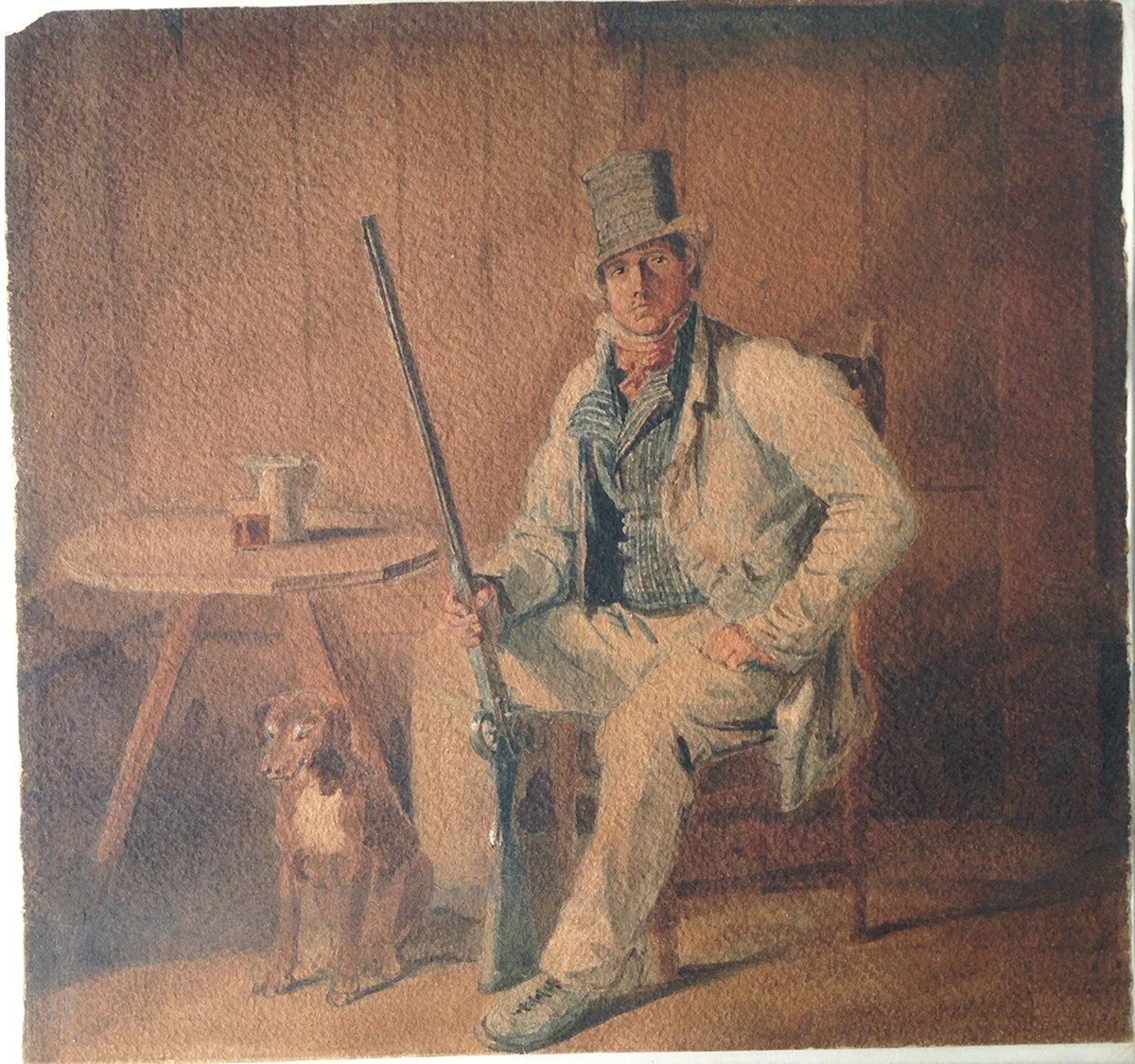
19th century hunting portrait, watercolor on handmade paper.
Condition: this painting had sustained a lot of physical damage. There were significant tears and losses, and the paint layer was soiled and abraded. An uneven application of varnish had severely discolored over time, and the painting was soiled with soot. Silverfish insects caused some minor losses to the media.
Treatment: the varnish coatings were removed with solvent mixtures, and the painting was float washed to remove degradation products in the paper. Losses were filled with handmade papers that matched the thickness and finish of the original paper. Small scratches and losses in the media were then inpainted with historically accurate pigments, and the painting was lined with Japanese paper for stabilization.